
Greg Ferch


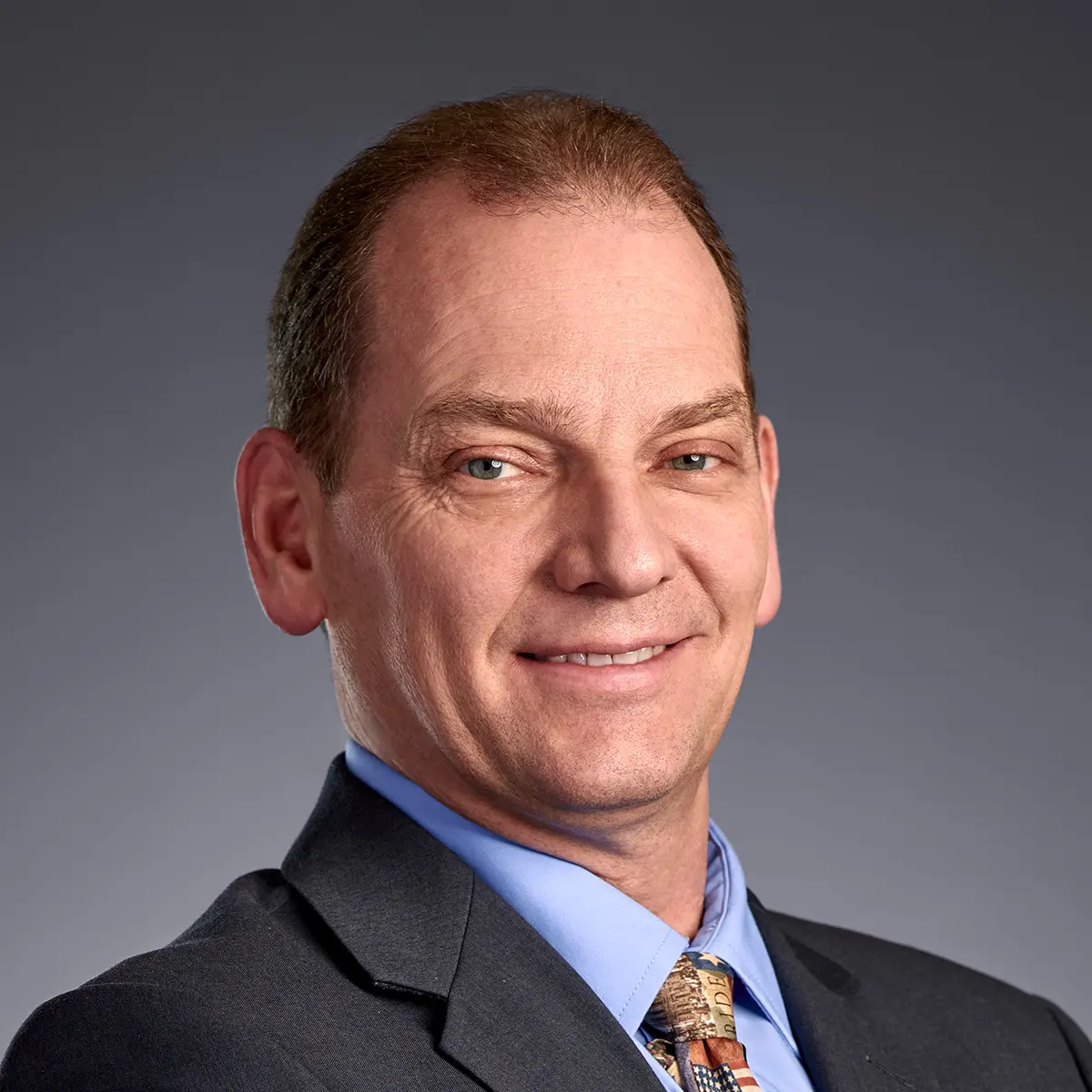
I moved to Idaho in 1994 and have dedicated my career to healthcare, business, and public service. I earned a Bachelor of Science in Human Biology from the University of North Dakota and later received my Doctor of Chiropractic degree. I am a small business owner, former Idaho state representative, serving in the Idaho House from 2021 to 2022, and currently serve as Chairman of the Central District Health Board. My diverse experience in healthcare, business, and government provides me with a practical understanding of the issues facing Idaho communities. I have held numerous Republican Party elected positions.
Idaho GOP Platform Responses
✓+ Strongly Agree ✓ Somewhat Agree O Somewhat Disagree X Strongly Disagree
| Topic | Candidate’s Explanation | |
|---|---|---|
| ✓+ | Responsibility in Government | N/A |
| ✓+ | Citizen Involvement | N/A |
| ✓+ | Education | N/A |
| ✓+ | Agriculture | N/A |
| ✓+ | Water | N/A |
| ✓+ | Natural Resources / Environment | N/A |
| ✓+ | Energy | N/A |
| ✓+ | Idaho National Lab | N/A |
| ✓+ | Private Property Rights | N/A |
| ✓+ | State / Federal Lands | N/A |
| ✓+ | Wildlife | N/A |
| ✓+ | Economy | N/A |
| ✓+ | Health and Welfare | N/A |
| ✓+ | American Family | N/A |
| ✓+ | Older Americans | N/A |
| ✓+ | Law & Order w/ Justice | N/A |
| ✓+ | National Defense | N/A |
| ✓+ | Election of Idaho Judges | N/A |
| ✓+ | Religious Liberty | N/A |
Survey and Interview Responses
“How long have you lived in Ada County?
32 years
How long have you been a Republican? Any prior party affiliation?
I was raised Right, so my whole life. No other party.
Have you been involved with any political organizations? (IACI, Idaho Majority Club, IFF, etc.)
I have attended events for IFF, Majority Club, Conservatives of, Citizens Alliance, County and State Republican Party. While not overtly political have supported Friends of the NRA annually.
Have you supported candidates from another party?
No
Why are you running for this office?
It is no secret that Ada County is struggling with congestion and gridlock on our roads. Some believe that this is happening because ACHD is not currently focusing on the most important priorities. I am running to ensure taxpayer resources are used to make sure that cars can get from point A to B in the most efficient way possible. . I believe that I will bring an experienced, new perspective to ACHD, and we can make cars move again
Have you held elected office before?
Yes, I was a State Representative during the ’21 and ’22 sessions. While not elected myself, our elected Ada County Commissioners appointed me to the Central District Health Board, which I now chair, about three years ago.
What makes you qualified for this role?
Running my own business for 32 years. Being very involved with party politics at many different levels. Having interacted personally with ACHD and other municipal and State agencies in the past. Helping oversee billions of dollars in taxpayer resources at the State level and millions at CDH. I believe that being an 11-year Army Veteran adds to the diversity of experience that I possess.
If elected, what 2-3 actions do you intend to pursue in your first year?
- Improve traffic while maintaining safety.
- Be a good steward of taxpayer dollars.
- Make sure ACHD is easy to work with.
How have you served your community (boards, nonprofits, etc.)?
Part of this answer is reflected in previous questions. However, I would add that I have also been a Board member of the Idaho Association of Chiropractic Physicians. President of a large 380-home subdivision for three years during the time we were annexed into the city.
Do you consider yourself fiscally conservative?
Yes, I am as careful with taxpayer resources as I am with my own.
Do you consider yourself socially conservative?
Yes, I support traditional biblical/ family values.
Share your one-minute elevator speech.
I live in South Boise, and there has been a lot of concern with traffic, congestion, and prioritization out there. My motivation is to address that. I’m doing that by focusing on making sure traffic moves and we’re being good stewards of taxpayer resources and making sure things are safe.
What are your top priorities, and what would you act on first?
There appears to be a lack of prioritization in some pretty hotspot areas, congestion-wise, and especially in South Boise. The impression is that there might be a bit of a bias in which areas are being served, with the resources given the current makeup of the board. Maybe refocusing or making sure that we’re addressing the most problematic areas where the taxpayers can get the most bang for their buck. We need to look at things, as opposed to who’s beholding to who, and who lives in what geography, and the appearance of what voter bases are in what area.
What is one current ACHD policy or practice that you believe isn’t working as well as it should, and what specifically would you change if elected
What I’m hearing is that they’ll take public surveys, for instance, a project off Desert, and the proposal that ultimately was adopted, was one of the least supported by the stakeholders in the area. Along Desert, there’s a lot of bigger lots, half-acre, acre lots, and a lot of those people have garages and shops and have backyard access off Desert. The proposal that was adopted, eliminates, apparently on the south side of the road, those people’s access, because it creates a 10- or 12-foot-wide landscape barrier with bike paths and everything. People will lose access to the current access that they have off desert unless they pay for a curb cut specifically. It appears that the policy that was adopted takes away their access, but they can pay extra to get their access back. The point is, there appears to be an ideological direction that the current commission wants to go at the expense of what the stakeholders and adjacent property owners prefer. Making things a little bit more responsive to the voters, the landowners, the homeowners, as opposed to achieving unique, philosophic direction of the Commission is important.
Do you believe growth is paying for growth in Ada County today? If not, what would you change?
It doesn’t seem like it. I’m not privy yet to a lot of the exact numbers that are collected by ACHD in impact fees. You know, when new projects come in, how much impact fee is generated compared to how much it costs to widen the road in front of a new subdivision. I know it sounds a little waffly, but sometimes you don’t have all the data until you get there. But It appears that it’s not.
ACHD’s FY2027 budget is approximately $261 million, including $133 million in capital projects. If you believe ACHD needs additional funding to address transportation needs, what revenue source would you support—and if you don’t support additional revenue, what projects or services would you reduce or delay?
I’ve been digging into that a lot, and there might be a way to improve a lot of the traffic flow issues. From what I understand, I’ve been in contact with Dave McKinney, a current board member, and I’m finding that about 20% of the budget are special projects that are shifting towards elaborate bike lanes and walking paths and things like that. I think that increasing the funding for true traffic congestion could at least in part be started by maybe refocusing some of the resources they already have. The core mission of ACHD is to move traffic from A to B. It doesn’t mean we completely sacrifice safety. Kids need a safe path from home to school. I think we can refocus some of the current dollars. There’s conversation at the State level that there might be some way to find some more funding for priorities to alleviate the congestion. If there was a certainty that the money would be spent to do so, as opposed to special projects. I’m fortunate that Transportation Chair, Joe Palmer has publicly endorsed me and made a sizable contribution. Majority Leader Monks has publicly endorsed the former transportation chair. Senate Transportation Vice Chair Lori Denhartog has made a significant contribution to the campaign. So, I think that we’re gathering some steam with people that are in this issue.
Where does ACHD need better coordination with Ada County, cities, and ITD, and how would you improve it?
I’m in the process of gathering information on that. Literally, in my web browser, I have the Garden City City Council pulled up, the Kuna City Council pulled up, Star and Eagle City Councils pulled up and certain individuals. I’m in the process of contacting them to see how they feel the interactions been with the municipalities and ACHD. I get the sense so far that there tends to be a prioritization to Boise type mindset priorities as opposed to Kuna priorities. But in answer to your question, I I’m in the fact-finding business, but I get the sense that maybe ACHD isn’t responsive to the other entities. They weren’t particularly responsive to the property owners on Desert Road when it came to picking a plan.
ACHD invests in bike lanes, multi-use pathways and other bicycle infrastructure. What criteria should ACHD use to determine when a dedicated bike lane is appropriate, and when road space should instead be devoted to vehicle capacity, parking, or other uses?
The default mission for the highway district is to focus on vehicles. Vehicles use highways or roads and how can you prioritize that and have some version of pedestrian and bike lanes. There’s a sample proposal near my house in Amity where they want to come in and redo it. It doesn’t net out any traffic improvement and still maintains one lane each way, but it adds 10- to 12-foot-wide fancy elaborate two-way traffic on each side of the road in a bike lane. Maybe we can add some traffic lanes and still maintain a reasonable bike access or, kids walking to school safely access. But right now, some of the projects that are being proposed are hyper emphasizing the bike and the pedestrian. And we all know, I mean, you must understand that bicyclists have to get something for all the gas taxes they pay. We got to be mindful of their desires, but there seems to be a hyper-prioritization, and I think that comes back to that 20% of the budget that appears to be going to things like that as opposed to moving more cars from A to B.
ACHD has a 5 year plan for capital improvement projects. How will you prioritize which projects make the list?
Well, you know, when I was out campaigning during the legislative primary, I was hearing a lot about that. for instance, I’m near Amity and Maple Grove, and Maple Grove is on that plan at one moment, and then it’s off that plan. I’ve heard people complain about Cloverdale in similar situations, and right now I’m not privy to exactly why the Commission is yanking one over another. It seems to me reasonable that whatever traffic counts, traffic studies exist, we should focus the tax dollars on the area that would be most likely to solve the biggest problems and do it with the biggest bang for the taxpayer buck. They pull projects because they’re in a different demographic or voting demographic.
ACHD is responsible for serving motorists, pedestrians, cyclists, and other users. When limited road space forces a choice between adding vehicle capacity and adding bicycle or pedestrian infrastructure, what factors should determine which gets priority? Should maintaining or increasing vehicle capacity generally take precedence on major transportation corridors? Why or why not?
Given the fact that vehicles pay the gas taxes, those resources should be focused on addressing auto traffic problems. Some of the plans and proposals I’ve seen offer quite elaborate bike and pedestrian infrastructure. Maybe we can create a little bit more modesty in those areas and still be able to add capacity for vehicles. You know, I guess you could argue it really requires 12 feet of landscaping and two-way bike traffic, lines painted on a sidewalk, just like we do on a street, and have two-way traffic on a bike lane on both sides of the road. Maybe we can be a little more modest and still fulfill the mission to create some bike ability, but not at the expense of traffic. Again, I come back to that proposal on Amity down the road from me, where they go through all this work and we end up with the same one lane each direction for cars, but we’ve got two lane traffic on each side of the road for bikes and pedestrians.
Should maintaining or increasing vehicle capacity generally take precedence on major transportation corridors? Why or why not?
I think that that really is the core mission of the highway district, literally, it’s in the title of the entity. That should be the focus, especially on some of the major corridors. We’ve had a lot of complaints. In the primary campaign, one lady along Maple Grove specifically hit me up for on what the widening plan on Maple Grove was. We’re going to do it and then we’re not going to do it. And how are these things getting shifted around? In the meantime, you know, she can’t get out of her property at certain times because it’s backed up from Amity to Victory. There is a lot of concern and the public opinion is that we should be focusing on traffic congestion mitigation as opposed to elaborate fancy bike lanes, especially along some of the major corridors, such as Cloverdale, Maple Grove, Victory and Amity.
What question do you wish voters were asking candidates that they aren’t?
They should be looking at the percentages and how much money is being spent. Such as 20% of the budget going to community programs. If the voters were a bit more engaged, you know, they might be asking, what does that $52 million buy?”